2026-10-21 · Rick Delgado
San Jose Street Permit Rules for Dumpster Rentals
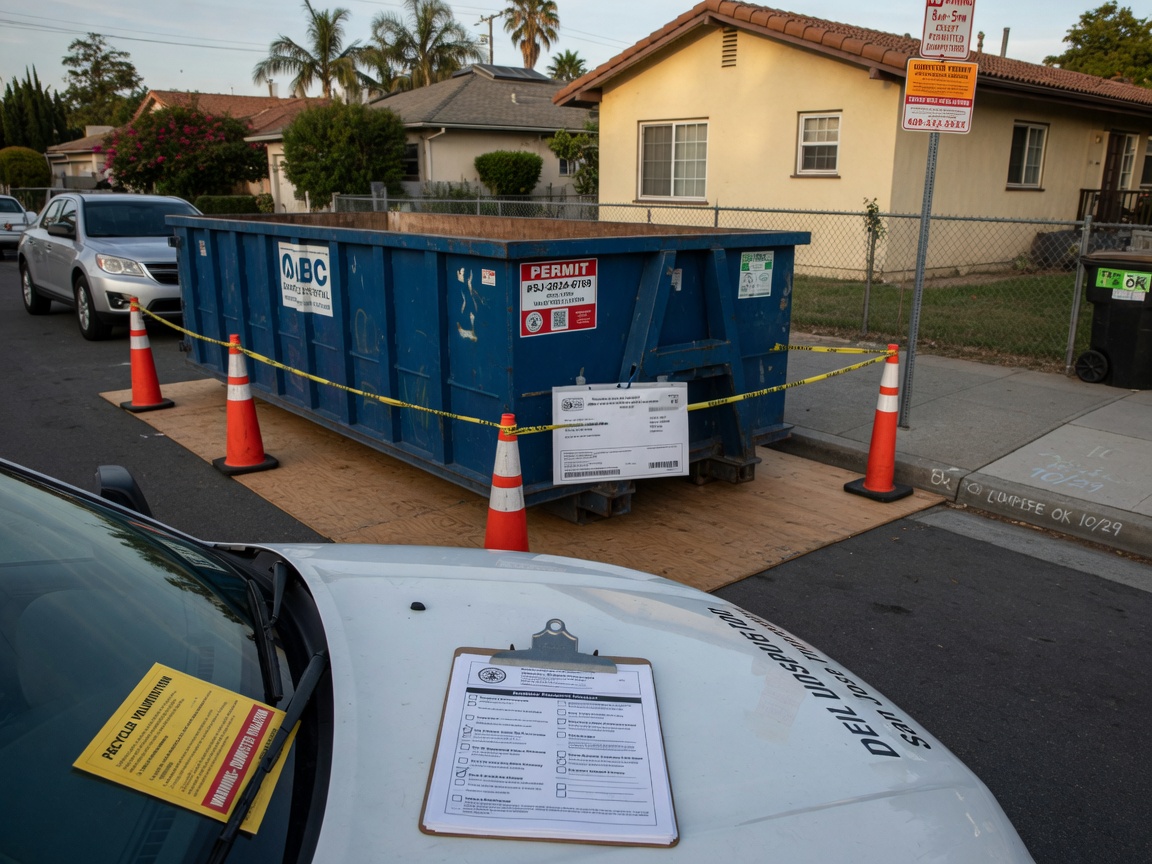
In San Jose, any dumpster positioned on a public street needs prior approval through the city’s encroachment permit process to avoid fines or immediate removal. This applies whether the job sits in Downtown San Jose near San Jose City Hall or along quieter residential blocks in Willow Glen. Local crews learn quickly that older housing stock in Japantown and Alum Rock often features narrower streets and limited curb space, which changes how a unit can sit without blocking driveways or fire lanes. The mild Mediterranean climate keeps most work moving year-round, yet summer dryness brings more construction projects that increase permit demand.
San Jose Permit Requirements for Street Placement
San Jose requires an encroachment permit whenever a dumpster occupies the roadway rather than a private driveway. Applications go through the Department of Public Works and must include the exact placement address plus traffic control plans if the unit sits near intersections. In neighborhoods such as Evergreen or Almaden Valley, reviewers check sight lines and slope because many streets follow the valley terrain. Operators serving nearby Santa Clara and Milpitas see similar rules, yet each city handles its own paperwork. Homeowners in Cambrian often discover that permits take longer when the street already carries heavy commuter traffic from nearby highways.
How Local Housing Stock Changes Placement Rules
San Jose’s older homes in Alum Rock and Japantown sit on tighter lots with limited side yards, pushing more rentals onto the street. These blocks frequently have mature trees and overhead lines that force dumpsters farther from the curb than newer subdivisions in Evergreen allow. Crews working near the Winchester Mystery House or Rosicrucian Egyptian Museum must also respect pedestrian routes that see steady tourist traffic. The same constraints appear in Campbell and Santa Clara, where mid-century ranch homes leave even less curb length for a standard 20-yard unit. Checking the specific block layout before ordering prevents last-minute moves that delay projects.
Weather Patterns and Their Effect on Permits
San Jose’s warm, dry summers reduce weather-related permit delays, yet winter rains still require extra planning for drainage around the unit. Streets in low-lying sections of Alum Rock can collect water quickly, so Public Works sometimes adds conditions about gravel base or reflective markers. Linking to practical guidance on seasonal impacts helps residents prepare: How Winter Rains Affect Dumpster Placement in San Jose. The same mild climate that supports year-round work also means steady renovation activity in Willow Glen and Downtown San Jose, keeping permit queues active most months.
Steps to Secure a Permit Before Delivery
Start by confirming the exact street address and measuring available curb space at least one week ahead. Submit the encroachment application online or at the Public Works counter with a site sketch showing the dumpster location relative to driveways and hydrants. Once approved, display the permit tag visibly on the unit. Residents planning larger cleanouts often pair this step with a Residential Dumpster Rental that already includes guidance on city paperwork. Checking rules for nearby cities such as Milpitas prevents confusion when the job crosses municipal lines.
Avoiding Common Issues in Santa Clara County Jobs
Many delays trace back to missing traffic plans or placing units too close to bus stops in high-traffic corridors near San Jose Arena. In Almaden Valley, hillside driveways sometimes slope toward the street, requiring extra blocking that the permit must note. Matching the right container size early reduces the chance of needing a second unit and another permit round; see Matching Dumpster Size to Common San Jose Renovation Projects. Operators based at 1080 E Brokaw Rd stay familiar with these variables because daily routes cover both dense downtown blocks and spread-out subdivisions across the county.